A cough after smoking is not automatically “just bronchitis”: its duration, pattern, exposures and accompanying symptoms determine whether you need simple supportive care, lung-function testing or urgent assessment. You will learn how to recognise warning signs, prepare for a chest-physician visit and judge when a local appointment is the right next step.
Key takeaways
- Seek assessment for a cough lasting over three weeks.
- Treat coughing blood, severe breathlessness, or chest pain as emergencies.
- Expect questions about smoking, symptoms, medicines, and previous lung conditions.
- Antibiotics do not treat uncomplicated viral acute bronchitis.
When a smoking cough needs a chest physician instead of self-treatment
Acute bronchitis often improves gradually over 2–3 weeks. Arrange medical assessment if your cough lasts more than three weeks, repeatedly returns, or persists while you smoke; in an adult, a cough lasting eight weeks or longer is chronic. Smoking irritates and inflames the airways, damages mucus clearance, raises COPD risk and increases lung-cancer risk.
Repeating cough syrup or antibiotics can delay the correct diagnosis.
Use the cough’s pattern to decide why review matters:
- Variable wheeze, with symptoms triggered by exercise, cold air, allergies or night-time, suggests asthma.
- Persistent breathlessness during exertion with airflow limitation suggests COPD.
- Fever, pain that worsens with breathing, or sudden deterioration raises concern for pneumonia.
- Night sweats, weight loss or tuberculosis exposure requires tuberculosis evaluation.
- Daily large-volume sputum, or recurrent episodes of infected sputum, can point to bronchiectasis.
- Green or yellow sputum alone does not prove a bacterial infection.
A search for chest physician for bronchitis hadapsar or chest physician bronchitis for smoking cough hadapsar is appropriate when the cough is persistent, recurrent, or accompanied by wheeze, breathlessness or weight loss. Report cigarette or bidi use, vaping, sputum, fever and dust or chemical exposure.
A chest physician can decide whether you need spirometry, a chest X-ray, sputum testing or tuberculosis evaluation rather than another round of self-treatment.
Emergency signs that should not wait for a Hadapsar appointment
Severe or rapidly worsening breathlessness, blue lips or face, confusion, or inability to speak full sentences require emergency assessment, not a routine Hadapsar appointment. These signs can indicate oxygen failure or another urgent chest problem.
| Sign | Why it matters | What to do |
|---|---|---|
| Severe breathlessness or inability to speak full sentences | Possible oxygen failure or serious airway disease | Seek emergency care now |
| Blue lips or face, confusion, or markedly low oxygen saturation | Possible dangerously low oxygen | Seek emergency care now |
| Coughing blood | Possible bleeding or a serious lung condition | Seek emergency care now |
| Chest pain | Possible urgent chest or lung problem | Seek emergency care now |
| Persistent high fever | Possible serious infection, including pneumonia | Seek emergency care now |
Do not wait while repeatedly taking cough syrup, leftover antibiotics, or an old inhaler. These may mask deterioration, cause harm, or delay the correct treatment.
For a smoking cough doctor in Pune, prepare details that change the assessment:
- Cigarette or bidi use, vaping, and pack-years
- Cough duration, sputum, wheeze, breathlessness, and fever
- Weight loss, previous tuberculosis, or tuberculosis exposure
- Exposure to workplace dust, fumes, or chemicals
Bring your medicines, inhalers, previous reports, and oxygen readings if available. If any emergency sign appears, go to an emergency department rather than travelling to a routine clinic visit.
What happens at the first chest-physician visit
The first visit identifies whether the cough is acute bronchitis or an underlying airway disease. Expect questions about cigarette or bidi quantity and duration for pack-year calculation, symptom timeline, previous tuberculosis or lung disease, medicines including ACE inhibitors, workplace dust, fumes or chemicals, and recurrent episodes.
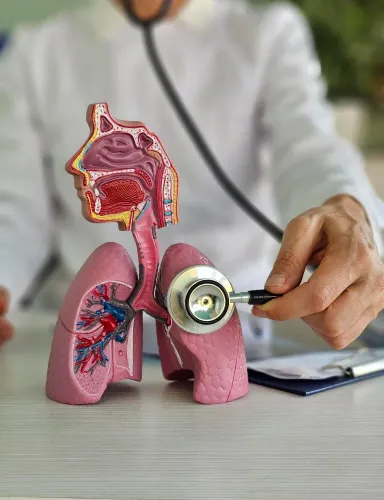
The clinician checks pulse oximetry, temperature, pulse, breathing rate and blood pressure, then listens for wheeze, crackles and reduced air entry.
| Test | What it answers | When it applies |
|---|---|---|
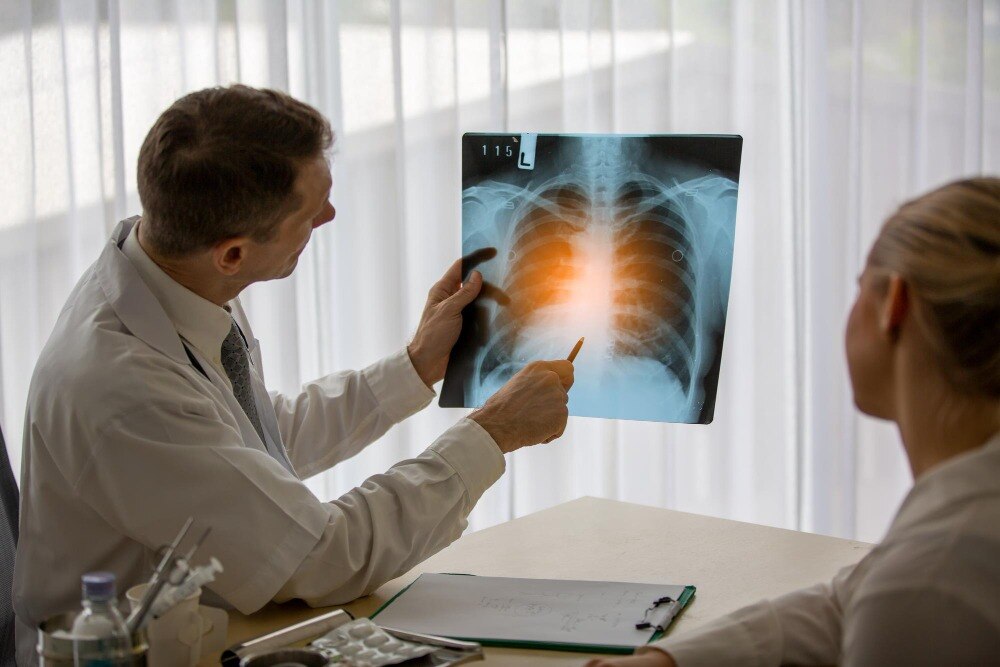
| Chest X-ray | Looks for pneumonia, tuberculosis, a mass or structural changes | Abnormal examination, concerning symptoms or persistent cough |
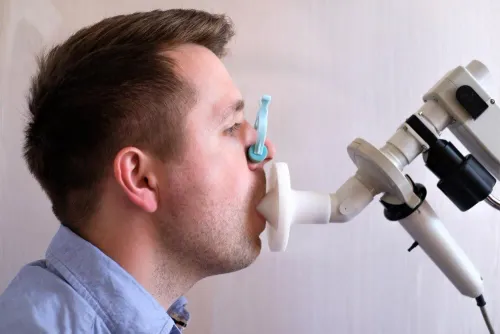
| Spirometry | Measures airflow and confirms persistent obstruction | After acute infection and severe symptoms settle |
| Bronchodilator test | Assesses whether airflow limitation reverses | Alongside spirometry when asthma is possible |
| Peak-flow readings | Shows day-to-day or trigger-related variation | Suspected variable asthma symptoms |
| Sputum testing | Checks for infection or tuberculosis | Persistent, recurrent or concerning sputum |
| Blood tests | Assesses inflammation, infection or other contributors | When examination or history indicates |
| CT scan | Provides more detailed views than an X-ray | When X-ray or symptoms warrant it |
| Bronchoscopy | Examines airways or obtains samples | When less-invasive tests leave the cause unanswered |
A post-bronchodilator FEV1/FVC below 0.70 supports COPD in clinical context. Variable reversibility and symptom patterns support asthma, but results are interpreted together rather than read in isolation. A normal X-ray does not exclude asthma or early airway disease. A search for “bronchitis specialist near me” should lead to an evaluation, not repeated labels.
What treatment is appropriate for acute bronchitis and smoking-related airway disease
Uncomplicated acute bronchitis is usually treated with fluids, rest and clinician-selected symptom relief, not routine antibiotics. The cough can take 2–3 weeks to settle. Green or yellow sputum does not prove a bacterial infection; viral bronchitis can produce both colours.
Treatment choices depend on examination, symptom pattern and, when needed, testing:
- Antibiotics are considered when a clinician identifies pneumonia, pertussis, a bacterial infection or a COPD exacerbation with relevant features. They do not treat most viral bronchitis.
- Bronchodilators or inhaled corticosteroids are used when examination and testing indicate asthma, COPD, bronchospasm or another airway disorder. They are not automatic treatment for every cough.
- Smoking cessation belongs in the treatment plan. Behavioural support and clinician-reviewed options such as nicotine replacement therapy, varenicline or bupropion can be considered after checking contraindications.
Do not self-prescribe leftover antibiotics or inhalers. Antibiotics can cause adverse effects, interact with other medicines and promote resistance; they can also delay the correct diagnosis when a smoker has persistent symptoms. An unnecessary inhaler or steroid adds treatment without addressing a viral cough.
Stopping smoking reduces ongoing airway irritation and remains important whether or not COPD is confirmed. If you are looking for bronchitis treatment near Hadapsar, ask whether the clinician will assess smoking-related airway disease rather than repeatedly treating every persistent cough as infection. Persistent symptoms need review, especially when treatment does not produce steady improvement.
Choosing the right bronchitis appointment near Hadapsar
A general physician can assess an uncomplicated, recent cough with stable vital signs. Choose a chest physician or pulmonologist for a persistent or recurrent cough, smoking exposure, unexplained breathlessness, an abnormal oxygen reading or spirometry result, or concern about COPD, tuberculosis, bronchiectasis or another lung condition.
| Option | Best fit | What to confirm |
|---|---|---|
| General physician | Recent, uncomplicated cough | Whether examination suggests pneumonia or needs referral |
| Chest physician | Persistent, recurrent or smoking-related cough | Access to spirometry, chest imaging and sputum testing |
| Urgent hospital care | Severe breathlessness, coughing blood or confusion | Do not wait for a routine appointment |
Before booking a chest physician for bronchitis Hadapsar, check whether the clinician investigates causes rather than repeatedly assigning every cough the label “bronchitis.” Ask whether spirometry, a chest X-ray or sputum testing is needed, and whether the clinic can arrange referral when hospital care is safer.
Bring these items to the appointment:
- A medication list, including inhalers and recent antibiotics
- Previous chest X-rays, spirometry results and other reports
- Smoking details: cigarettes or bidis per day, years of use, vaping and workplace dust or chemical exposure
- A symptom timeline covering cough, sputum, wheeze, breathlessness, fever and weight loss
The search phrase bronchitis specialist near me should lead to a clinician who can find the cause. In Pune, Dr Kunjir's Brio Clinic may be one outpatient respiratory-assessment option near Hadapsar; confirm availability and offered tests first.
A persistent smoking cough deserves assessment. Severe or rapidly worsening breathlessness, blue lips, chest pain, confusion, coughing blood, markedly low oxygen or inability to speak full sentences needs urgent care instead.
Related services
CHEST DISEASES TREATMENT COUGH, DIFFICULTY IN BREATHING If you are short of breath with a cough and/or fever, you may have a chest infection or pneumonia. View service → |
COUGH, DIFFICULTY IN BREATHING CHEST DISEASES TREATMENT PROVIDED FOR Bronchoscopic Lung Volume Reduction – a non-surgical procedure to improve breathing in people with emphysema and COPD. ... View service → |
Frequently asked questions
When should a smoking cough be assessed by a chest physician?
Arrange assessment if the cough lasts more than three weeks, repeatedly returns, or continues while you smoke. A cough lasting eight weeks or longer in an adult is chronic.
Which emergency signs should not wait for a Hadapsar appointment?
Seek urgent medical care for severe breathlessness, blue or grey lips, confusion, coughing blood, severe chest pain, or rapidly worsening symptoms.
What happens at the first chest-physician visit?
The physician reviews your cough, sputum, smoking exposure, medicines, medical history and warning signs, then examines your chest and decides whether tests are needed.
What treatment is appropriate for acute bronchitis and smoking-related airway disease?
Treatment depends on the cause and examination. Acute bronchitis often improves over two to three weeks; antibiotics do not help uncomplicated viral bronchitis, while smoking-related airway disease may require inhalers, smoking cessation support and follow-up.
How do you choose a bronchitis appointment near Hadapsar?
Choose a chest physician who evaluates persistent cough, smoking-related airway disease and breathlessness, offers appropriate testing when needed, and provides follow-up rather than treating every cough with antibiotics.
Related services
Chest Diseases Treatment BRONCHITIS Bronchitis is a condition that develops when the airways in the lungs, called bronchial tubes, become inflamed and cause coughing, often with mucus... |
Chest Diseases Treatment BRONCHIECTASIS Bronchiectasis is a long-term condition where the airways of the lungs become widened, leading to a build-up of excess mucus that can make the lungs... |
Chest Diseases Treatment Asthma triggered by exposure to the same substances that trigger allergy symptoms. View service → |
Chest Diseases Treatment HEART DISEASES - COR PULMONALE Cor pulmonale is a condition that causes the right side of the heart to fail. View service → |
Keywords