A persistent smoker’s cough needs more than a cough suppressant: smoking can impair airway clearance, but it does not prove that smoking caused bronchiectasis. You will learn which tests confirm the diagnosis, how treatment is managed, which warning signs require urgent care and how to compare respiratory services near Hadapsar.
Key takeaways
- Smoking damages airway cilia and worsens mucus, inflammation and flare-ups.
- A high-resolution CT scan confirms bronchiectasis and shows affected airways.
- Treatment combines smoking cessation, airway-clearance techniques and cause-specific medical care.
- Seek urgent assessment for worsening breathlessness, chest pain or coughing blood.
Can smoking cause bronchiectasis, or is it worsening another condition?
Tobacco smoke is usually an aggravator, not the sole explanation for bronchiectasis. Smoke damages airway cilia, thickens mucus and sustains inflammation, so cough, breathlessness and flare-ups become harder to control. Smoking and bronchiectasis treatment therefore require smoking cessation, while clinicians investigate the original cause.
Persistent cough in a smoker needs a broader differential:
- Bronchiectasis: permanent airway widening with recurrent mucus and infections.
- Chronic bronchitis: cough and sputum for at least three months in two successive years.
- COPD: persistent airflow obstruction, confirmed with spirometry.
- Asthma: variable symptoms, wheeze and airflow limitation.
- Pneumonia: an acute infection that can cause fever, chest pain and new imaging changes.
- Lung cancer: a tumour that can cause persistent cough, weight loss, chest pain or coughing blood.
Ask the clinician to investigate previous severe infections, tuberculosis, asthma, COPD, immune deficiency, aspiration, allergic bronchopulmonary aspergillosis and genetic conditions such as cystic fibrosis. A chest X-ray cannot reliably confirm or exclude bronchiectasis; thin-section CT is needed when the diagnosis remains possible.
Seek emergency assessment, not a routine appointment, for sudden breathlessness, suspected pulmonary embolism, severe chest pain, major haemoptysis, blue lips, confusion, high fever or a low oxygen reading. More than a small streak of blood or rapidly increasing bleeding also needs urgent care.
Which tests confirm bronchiectasis and reveal its underlying cause?
A thin-section high-resolution CT (HRCT) scan confirms bronchiectasis by showing permanent widening of the bronchi, often with thickened airway walls or airways visible close to the lung surface. A normal or unclear chest X-ray cannot reliably confirm or exclude it because smaller, damaged airways may remain invisible.
| Test | What it shows | Why it matters |
|---|---|---|
| HRCT chest | Permanent bronchial widening | Confirms bronchiectasis and maps its extent |
| Sputum culture | Bacteria in airway mucus | Guides antibiotics; request mycobacterial testing when clinically indicated |
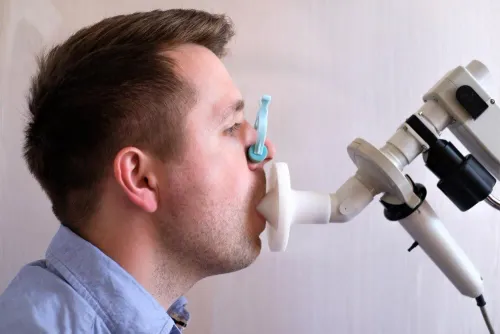
| Spirometry | Airflow obstruction | Identifies coexisting COPD or asthma |
| Pulse oximetry | Oxygen saturation | Shows whether oxygen levels need urgent assessment |
| Blood tests | Immune function, Aspergillus-related markers or other abnormalities | Targets causes suggested by your history |
A respiratory specialist for bronchiectasis in Pune may order immune evaluation, total IgE and Aspergillus-specific testing for suspected allergic bronchopulmonary aspergillosis. The history can also prompt testing for other conditions.
Bronchoscopy or lung biopsy is not routine treatment for smoking-related bronchiectasis. Doctors reserve them for selected questions, such as local airway blockage, unexplained bleeding or an unclear diagnosis; bronchoscopic lung-volume reduction is an emphysema-specific option, not bronchiectasis treatment.
Bring these records to a respiratory specialist bronchiectasis in Pune appointment:
- CT images and reports, spirometry, sputum and blood results
- Discharge summaries, medication list and vaccination history
- Smoking exposure in pack-years and an exacerbation diary detailing dates, sputum changes and treatment
What does a practical bronchiectasis treatment plan involve?
A practical plan combines smoking cessation, daily airway clearance, infection prevention and fitness work. For respiratory bronchiectasis, stopping tobacco removes ongoing irritation and impaired mucus clearance.
- Use behavioural counselling plus nicotine-replacement therapy, varenicline or bupropion when clinically suitable. Make a relapse plan, avoid passive smoke, vaping aerosol and biomass smoke, and record triggers that lead you back to cigarettes.
- Ask a respiratory physiotherapist to teach the active cycle of breathing techniques, huff coughing, postural drainage and, when appropriate, an oscillating positive-expiratory-pressure device. Stop the session and seek advice for marked dizziness, chest pain or worsening breathlessness.
- Drink enough fluid to avoid dehydration, join pulmonary rehabilitation when exercise capacity is limited, and increase activity gradually rather than stopping completely.
- Discuss influenza, COVID-19 and pneumococcal vaccination according to current eligibility recommendations. Hand hygiene and avoiding people with respiratory infections add practical protection.
- Use inhalers only when spirometry shows airflow obstruction, or when asthma or COPD provides an indication. An inhaler does not remove retained mucus or reverse bronchiectasis.
Airway clearance takes daily time, and adherence can be demanding. It targets mucus retention, while exercise and rehabilitation help limit functional decline. Searching for “smoking treatment Hadapsar” or respiratory bronchiectasis services is useful only if the provider can arrange technique teaching, spirometry and ongoing review rather than offering medication alone.
How should flare-ups, antibiotics and long-term monitoring be handled?
Treat a possible exacerbation as a sustained increase in cough, sputum volume or purulence, breathlessness, fatigue, haemoptysis or systemic illness. Every cough increase needs assessment, but not every increase requires antibiotics.
1. Submit a fresh sputum sample before repeated or long-term antibiotics when possible. Clinicians use your symptoms and culture results to select treatment; leftover medicines can miss resistant bacteria or non-tuberculous mycobacterial disease and can delay the correct diagnosis.
2. Seek hospital assessment for suspected pneumonia, severe breathlessness, low oxygen, inability to take treatment or rapid deterioration. Do not wait for a routine appointment if you are becoming acutely unwell.
3. Discuss long-term antibiotics only after other measures have been reviewed and flare-ups remain frequent or severe. A long-term macrolide suits selected patients after checks for hearing problems, liver toxicity, QT prolongation, drug interactions and antibiotic resistance; test for non-tuberculous mycobacteria before macrolide monotherapy.
At follow-up, record flare-up frequency, sputum volume and colour, breathlessness and exercise tolerance. Spirometry and oxygen saturation show whether lung function or oxygenation is changing.
Bronchiectasis treatment cannot usually reverse permanent airway widening. Persistent symptoms therefore need reassessment for COPD, asthma, ongoing infection or another diagnosis, rather than repeated self-treatment with antibiotics.
How do you choose a bronchiectasis doctor near Hadapsar?
A bronchiectasis doctor near Hadapsar is the practical choice only if the clinic can deliver a complete pathway, not merely a short commute. Compare travel time with pulmonary medicine expertise, high-resolution CT review, spirometry, sputum microbiology, recurrent-infection management and planned follow-up.
| Option | What it provides | What to check |
|---|---|---|
| Closest general clinic | Convenient assessment | Can it arrange CT review, spirometry and sputum testing? |
| Respiratory specialist | More focused diagnosis and treatment | Does the doctor manage recurrent infections and smoking-related disease? |
| Coordinated outpatient service | Assessment plus continuing care | Are airway-clearance teaching, smoking cessation, pulmonary rehabilitation referral and hospital escalation available? |
Ask before booking:
- Who reviews the actual CT images, not only the radiology report?
- Where is sputum processed, and can the laboratory perform bacterial culture and mycobacterial testing when indicated?
- What happens during a flare-up: same-day review, sputum collection, antibiotic decisions and oxygen assessment?
- Who teaches airway-clearance techniques?
- How are smoking cessation, pulmonary rehabilitation and scheduled follow-up arranged?
- Does the clinic coordinate admission or specialist hospital care if symptoms worsen?
Dr Kunjir's Brio Clinic is an outpatient option in Pune for respiratory assessment and ongoing care, so ask how it can arrange this pathway for your needs. A bronchiectasis clinic near me is useful only when it connects diagnosis, mucus-clearance support, infection monitoring and escalation.
Do not wait for an outpatient appointment for major haemoptysis, severe breathlessness, chest pain, confusion or suspected acute coronary syndrome; seek emergency care immediately.
Related service
Chest Diseases Treatment BRONCHIECTASIS Bronchiectasis is a long-term condition where the airways of the lungs become widened, leading to a build-up of excess mucus that can make the lungs... |
Frequently asked questions
Can smoking cause bronchiectasis?
Smoking is usually an aggravating factor rather than the sole cause. It damages airway cilia, thickens mucus and sustains inflammation, so existing bronchiectasis becomes harder to control.
Which tests confirm bronchiectasis?
A high-resolution CT scan of the chest confirms bronchiectasis. Clinicians may also use sputum testing, lung-function tests and blood tests to investigate infection, immune problems and other underlying causes.
What does bronchiectasis treatment involve?
A practical plan can include stopping smoking, airway-clearance techniques, treatment of infections, inhaled medicines when indicated and management of the condition that caused the bronchiectasis.
When should you seek care for a bronchiectasis flare-up?
Contact your respiratory clinician when your cough, sputum volume, sputum colour, fever or breathlessness worsens. Seek urgent care for severe breathing difficulty, chest pain or significant coughing of blood.
Keywords