Choosing a pulmonary function test for suspected cor pulmonale requires more than finding the nearest facility that advertises “PFT.” You need to know which measurements are included, how to prepare, and how the results will be combined with heart, imaging and blood-flow assessments.
Key takeaways
- Spirometry shows airflow; it does not measure pulmonary artery pressure.
- Ask about DLCO, lung volumes and oxygen testing when cor pulmonale is suspected.
- Avoid smoking before testing and follow instructions about inhalers and meals.
- Combine PFT results with echocardiography, ECG and blood-flow assessment.
What does a pulmonary function test show when cor pulmonale is suspected?
A cor pulmonale pulmonary function test helps show whether lung disease could be contributing to right-heart strain; it does not show the pressure inside the pulmonary arteries. The useful package is broader than a peak-flow reading or basic spirometry alone.
- Spirometry measures forced exhalation, including FEV1, FVC and the FEV1/FVC ratio. It shows whether airflow is obstructed and whether bronchodilator testing changes that pattern.
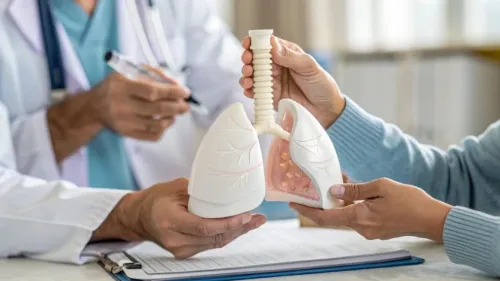
- Lung-volume testing measures the total amount of air your lungs hold, including residual air left after exhalation. It can reveal restriction or hyperinflation that spirometry alone may miss.
- DLCO measures how efficiently carbon monoxide passes from the air sacs into the blood. A reduced result points to impaired gas transfer, which can occur with emphysema, interstitial lung disease or pulmonary vascular problems.
These measurements support pulmonary testing for heart-lung disease by identifying possible causes of breathlessness, low oxygen and increased pressure in the lung circulation. They do not diagnose cor pulmonale, which involves structural or functional change in the right ventricle caused by lung or pulmonary vascular disease.
Clinicians interpret PFT results alongside examination, ECG, chest imaging and echocardiography. A normal spirometry result does not exclude pulmonary hypertension, chronic thromboembolic disease or early interstitial lung disease. Right-heart catheterisation is the test used to confirm pulmonary hypertension and measure pulmonary artery pressures directly.
Which PFT measurements help identify the underlying cause?
FEV1, FVC, FEV1/FVC, lung volumes and DLCO create a pattern that points toward the lung or vascular problem driving right-heart strain.
| Finding | Typical PFT pattern | Possible explanation |
|---|---|---|
| Obstructive disease | Low FEV1/FVC, with reduced FEV1; bronchodilator improvement supports asthma | COPD, asthma or bronchiectasis |
| Restriction | Low FVC and low total lung capacity, with normal or high FEV1/FVC | Interstitial lung disease or chest-wall limitation |
| Hyperinflation | Increased total lung capacity, residual volume or functional residual capacity | Air trapping in COPD or severe asthma |
| Emphysema | Obstruction, increased lung volumes and low DLCO | Loss of gas-exchanging surface |
| Interstitial lung disease | Low FVC, low total lung capacity and reduced DLCO | Thickened or scarred lung tissue |
| Sleep-related breathing disorders | Daytime spirometry can be normal; lung volumes and DLCO vary | PFT cannot show overnight obstruction or hypoventilation |
| Chronic thromboembolic disease | Spirometry can be normal; DLCO may be reduced or disproportionate to lung volumes | Pulmonary vascular limitation |
A normal spirometry result does not exclude pulmonary hypertension, chronic thromboembolic disease or early interstitial lung disease. A low DLCO also needs context: anaemia, smoking, poor inhalation and technical errors can lower it, so haemoglobin should be considered.
If you search for a cor pulmonale pulmonary function test, ask whether the package includes lung volumes and DLCO rather than spirometry alone. That broader approach is more useful for pulmonary testing for heart lung disease, but it still cannot measure pulmonary artery pressure or confirm cor pulmonale by itself.
How should you prepare for and complete the test?
Book a full package, not spirometry alone, when searching for a pft for cor pulmonale near Hadapsar. Ask whether the appointment includes spirometry, bronchodilator testing, lung volumes and DLCO, and follow the laboratory’s medicine instructions.
1. Avoid smoking immediately before the test and avoid strenuous exercise beforehand. Tell the technician about a recent chest infection, current breathlessness, oxygen use and every inhaler or pulmonary-hypertension medicine. Do not stop medicines unless the prescribing clinician or testing laboratory gives you a specific withholding time.
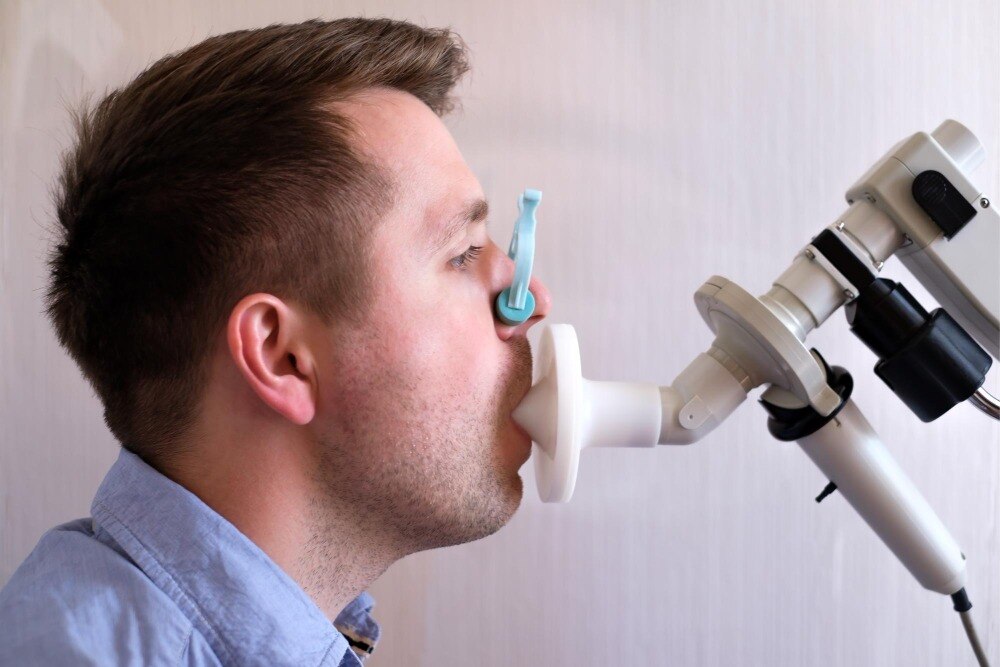
2. For spirometry, sit upright, wear a nose clip and seal your lips around the mouthpiece. Inhale fully, then blow out as hard and as long as instructed. Coughing, a leak, stopping early or giving less than maximal effort can make the result unreliable, so repeat forceful manoeuvres until the technician records acceptable, repeatable blows.
3. If bronchodilator testing is planned, you complete baseline blows, receive the prescribed inhaled medicine, wait for the stated interval and repeat spirometry. The comparison shows how airflow changes after the medicine.
4. Lung-volume testing uses a mouthpiece, often inside a sealed body box, to measure air that spirometry cannot capture. Follow the technician’s breathing pattern precisely.
5. DLCO measures gas transfer after you inhale a small tracer-gas mixture, hold your breath briefly and exhale into the mouthpiece. Report dizziness, chest discomfort or severe breathlessness immediately; pause rather than force an unsafe manoeuvre.
How are PFT findings combined with heart and blood-flow tests?
A PFT shows the lung pattern; the other tests show whether that pattern has produced low oxygen, pulmonary vascular strain or right-ventricular change. A normal spirometry result does not exclude pulmonary hypertension, chronic thromboembolic disease or early interstitial lung disease.
Clinicians commonly combine the findings this way:
- Echocardiography estimates the probability of pulmonary hypertension and assesses right-ventricular size, function and pressure-related changes. It screens; it does not replace catheterisation for a definitive haemodynamic diagnosis.
- An ECG looks for right-axis deviation, right-ventricular strain or rhythm problems. A normal ECG does not rule out early disease.
- Chest X-ray or CT looks for emphysema, bronchiectasis, interstitial lung disease, enlarged pulmonary arteries or chronic clots.
- Clinic pulse oximetry records resting oxygen saturation. Exercise oximetry or a six-minute walk test can reveal desaturation and reduced walking capacity; the walk test is functional testing, not a PFT.
- Arterial blood gases measure oxygen, carbon dioxide and acidity. Venous blood gases help assess carbon dioxide and acidity but do not measure oxygenation as accurately.
- Overnight oximetry or a sleep study checks for nocturnal desaturation, sleep apnoea and hypoventilation.
Right-heart catheterisation confirms pulmonary hypertension by directly measuring pressures and cardiac output. Choose pulmonary testing for heart lung disease that can be interpreted with this broader evidence, rather than requesting only a “cor pulmonale pulmonary function test” or basic spirometry.
How do you choose a cor-pulmonale testing option near Hadapsar?
A basic spirometry reading is not enough for every patient. If you search for “pft for cor pulmonale near Hadapsar”, confirm what the centre includes before booking: a normal spirometry result does not exclude pulmonary hypertension, chronic thromboembolic disease or early interstitial lung disease.
| Basic option | What it includes | Limitation |
|---|---|---|
| Spirometry only | FEV1, FVC and FEV1/FVC, sometimes peak flow | Cannot assess lung volumes or gas transfer |
| Comprehensive PFT | Spirometry, bronchodilator testing, lung volumes and DLCO | Gives a broader view of obstruction, restriction, hyperinflation and impaired gas transfer |
| Integrated assessment | Comprehensive PFT plus cardiac and vascular evaluation | Helps connect lung findings with echocardiography, imaging and referral decisions |
Ask these questions before you attend:
- Does “PFT” include lung-volume measurement and diffusing capacity for carbon monoxide (DLCO), or only spirometry?
- Will the report state ATS/ERS quality grading, including whether the manoeuvres were acceptable and repeatable?
- How will haemoglobin be considered when interpreting DLCO? Anaemia can lower the result without proving pulmonary vascular disease.
- Can a pulmonologist or respiratory physician review the findings and coordinate echocardiography, chest imaging, blood tests or right-heart catheterisation referral when indicated?
If you are deciding how to choose cor pulmonale specialist in Pune, prioritise coordinated interpretation over the shortest journey. Dr Kunjir's Brio Clinic is one local point for discussing symptoms, test selection and referral needs; location alone does not establish diagnostic quality.
A search for “pulmonary function test cor pulmonale for Hadapsar” should end with a centre that explains the complete pathway, not merely supplies a printout.
Related services
Chest Diseases Treatment HEART DISEASES - COR PULMONALE Cor pulmonale is a condition that causes the right side of the heart to fail. View service → |
COUGH, DIFFICULTY IN BREATHING CHEST DISEASES TREATMENT PROVIDED FOR Bronchoscopic Lung Volume Reduction – a non-surgical procedure to improve breathing in people with emphysema and COPD. ... View service → |
Frequently asked questions
What does a pulmonary function test show when cor pulmonale is suspected?
A PFT measures airflow, lung volumes, gas transfer and sometimes oxygen levels. It can show lung disease contributing to right-heart strain, but it does not measure pulmonary artery pressure.
Which PFT measurements help identify the underlying cause?
Spirometry identifies obstruction or restriction, lung volumes confirm reduced capacity, and DLCO assesses gas transfer. Oxygen saturation or exercise testing adds information about oxygen impairment.
How should you prepare for and complete the test?
Follow the clinic’s instructions about inhalers, smoking, meals and strenuous exercise. Wear comfortable clothing, seal your lips around the mouthpiece, and perform each coached manoeuvre fully.
How are PFT findings combined with heart and blood-flow tests?
Clinicians compare PFT results with echocardiography, ECG, chest imaging, oxygen measurements and blood-flow studies. Right-heart catheterisation directly measures pulmonary artery pressure when required.
How do you choose a cor-pulmonale testing option near Hadapsar?
Choose a centre that offers quality-controlled spirometry, lung volumes and DLCO, trained staff, prompt reporting and access to respiratory and cardiac assessment when results are abnormal.
Related services
CHEST DISEASES TREATMENT COUGH, DIFFICULTY IN BREATHING If you are short of breath with a cough and/or fever, you may have a chest infection or pneumonia. View service → |
Chest Diseases Treatment TUBERCULOSIS (TB) is a serious illness that mainly affects the lungs. The germs that cause tuberculosis are a type of bacteria. |
Chest Diseases Treatment Asthma triggered by exposure to the same substances that trigger allergy symptoms. View service → |
Chest Diseases Treatment BRONCHIECTASIS Bronchiectasis is a long-term condition where the airways of the lungs become widened, leading to a build-up of excess mucus that can make the lungs... |
Keywords