Breathlessness and wheezing cannot always be assessed accurately from symptoms alone. A Pulmonary Function Test for Lung Health provides objective information about how well air moves through the lungs and, depending on the test performed, how effectively the lungs hold or transfer air.
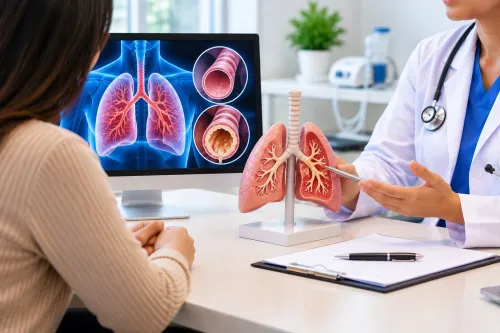
Pulmonary function testing is commonly used when asthma, chronic obstructive pulmonary disease or another respiratory condition is suspected. It may also help monitor a diagnosed condition or assess response to treatment.
What Is Spirometry?
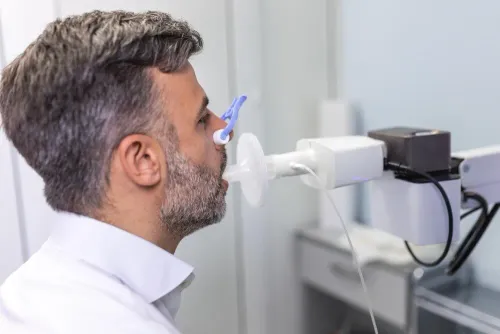
Spirometry is one of the most frequently performed lung function tests. The patient breathes into a mouthpiece connected to a calibrated device. After taking a full breath, the patient is asked to blow out as forcefully and completely as possible.
The test measures values such as:
- The total amount of air exhaled forcefully
- The amount exhaled during the first second
- The relationship between these measurements
- The consistency of repeated attempts
These results can help identify an obstructive airflow pattern. The clinician interprets them using factors such as age, height, sex and clinical history.
What Is a Bronchodilator Response Test?
In some cases, spirometry is performed before and after inhaled bronchodilator medicine. A meaningful improvement in airflow may support the presence of reversible airway narrowing, which can occur in asthma.
However, a normal result on one occasion does not automatically exclude asthma. Symptoms can vary, and the doctor may consider additional evaluation when the history remains suggestive.
Who May Need Testing?
A pulmonologist may recommend pulmonary function testing for people with:
- Recurrent wheezing
- Unexplained breathlessness
- Chronic cough
- Reduced exercise tolerance
- A history of smoking
- Occupational dust exposure
- Suspected asthma or COPD
- A diagnosed lung condition requiring monitoring
- Symptoms that do not match chest imaging findings
Testing may also be considered before selected surgical procedures, depending on the patient’s health and planned operation.
How to Prepare
Patients should follow the clinic’s instructions because preparation can vary. General guidance may include:
- Avoid smoking before the test
- Do not perform strenuous exercise immediately beforehand
- Wear comfortable clothing
- Avoid a heavy meal just before testing
- Ask whether inhalers should be withheld
- Inform the technician about recent illness or surgery
Prescribed inhalers should not be stopped unless the doctor or testing team specifically instructs the patient to do so.
What Can Affect Test Accuracy?
Pulmonary function testing requires active cooperation. An incomplete breath, air leakage around the mouthpiece, coughing during the manoeuvre or stopping too early can affect the result. The technician may ask the patient to repeat the test several times to obtain acceptable readings.
Results must be interpreted by a qualified clinician. A printed number by itself does not establish a diagnosis, and apparent abnormalities need to be considered alongside symptoms and medical findings.
Testing in the Local Context
In Pune, Maharashtra, patients with asthma, smoking exposure or occupational contact with dust may benefit from objective lung assessment when clinically indicated. Testing can distinguish perceived breathlessness from measurable airflow limitation and create a baseline for future comparison.
At Dr Kunjir's Brio Clinic, pulmonary function testing may form part of a broader respiratory evaluation. The results are considered with clinical history, examination and other investigations rather than used in isolation.
A pulmonary function test does not simply produce a pass-or-fail result. Its real value lies in helping the doctor understand the pattern and extent of breathing impairment, choose appropriate management and monitor meaningful changes over time.
Keywords