Pain during sex, unusual discharge, genital sores, bleeding, or changes in desire deserve more than guesswork and repeated self-treatment. You will learn which symptoms need a routine appointment, which require same-day care, what testing involves, and how to prepare for a sexual-health consultation in Pune.
Key takeaways
- Book an appointment for persistent pain, bleeding, discharge, sores or painful sex.
- Seek urgent care for severe pain, heavy bleeding, fainting, fever or suspected assault.
- After possible HIV exposure, ask about PEP within 72 hours.
- Share symptoms, partners, contraception and exposure dates honestly during testing.
Which sexual health symptoms mean you should book a gynaecology appointment?
Book a gynaecology appointment when a symptom persists, recurs, causes distress or limits sex, even if you cannot see an abnormality. This is the practical answer to sexual health problems when to see a gynaecologist in Pune.
| Symptom or finding | Often normal or temporary | Book an appointment when |
|---|---|---|
| Vaginal discharge | Clear or white, without a strong smell | Colour, texture or odour changes, or itching, pain, fever or bleeding occurs |
| Sexual discomfort | Brief dryness from insufficient lubrication | Penetration is painful, burning or persistently dry |
| Bleeding | A small, isolated cause may be benign | Bleeding follows sex, occurs between periods or happens after menopause |
Arrange assessment for itching, vulval burning, sores, blisters, unusual odour, pelvic pain or burning while urinating. Seek prompt care for reduced desire, difficulty reaching orgasm, fear of penetration or involuntary tightening of the vaginal muscles when these problems affect intimacy or wellbeing.
Recurrent pain is not automatically thrush. Inadequate lubrication, infection, pelvic-floor spasm, endometriosis, vulvodynia and emotional or relationship factors can all contribute, and repeated over-the-counter antifungal treatment can delay the correct diagnosis. A normal-looking examination does not make pain imaginary.
For sexual health symptoms in Pune, book a planned review for persistent or recurrent symptoms. Fever with pelvic pain, heavy bleeding, fainting, severe pain or pain during pregnancy needs same-day medical care rather than a routine appointment.
Which sexual health warning signs need same-day or emergency care?
Severe or one-sided pelvic pain, fainting, dizziness, shoulder-tip pain, heavy bleeding, or fever with pelvic pain needs same-day emergency care. Do not wait for a routine appointment: these signs can indicate ectopic pregnancy, pelvic infection, internal bleeding or another acute problem.
| Sign | Action | Why it matters |
|---|---|---|
| Severe or one-sided pelvic pain | Go to an emergency department now | Possible ectopic pregnancy or another acute pelvic condition |
| Positive pregnancy test with pain, bleeding, dizziness or shoulder-tip pain | Seek emergency assessment immediately | An ectopic pregnancy can rupture and cause life-threatening bleeding |
| Heavy bleeding, fainting or marked weakness | Call emergency services or attend the emergency department | Significant blood loss requires prompt treatment |
| Fever with pelvic pain or feeling very unwell | Obtain same-day medical care | Pelvic infection can worsen without antibiotics and drainage |
A suspected ectopic pregnancy needs assessment even when the pain is mild. A pregnancy test, ultrasound and blood tests may be needed; do not rely on a normal early scan or wait for symptoms to settle.
After suspected sexual assault, move to immediate safety and seek medical care. You can ask about evidence preservation, injury treatment, STI testing, emergency contraception and support without deciding immediately whether to report. If reporting is possible, avoid washing, changing clothes or discarding clothing until you receive advice.
A copper intrauterine device can provide emergency contraception within five days of unprotected intercourse. Emergency pills work within medicine-specific time windows and should be taken as soon as possible; neither treats an established pregnancy or prevents STIs.
For possible HIV exposure, start PEP as soon as possible and no later than 72 hours, then take it for 28 days. Use emergency services or a clinician who can start it promptly when seeking sexual health advice in Pune.
How can an STI appear, and what should you do after possible exposure?
An STI can be present without discharge, pain or visible lesions. Chlamydia, gonorrhoea, HIV, syphilis, HPV and herpes can all be silent, so testing should follow exposure and risk—not symptoms alone.
Possible signs include sores or blisters, warts, unusual discharge, pelvic pain, pain while urinating, rash or swollen glands, but symptoms cannot reliably identify the infection.
After possible exposure, stop sexual contact or use condoms until assessed. Tell partners who may need testing, and disclose oral or anal sex, condom breakage, new partners and recent antibiotics. If HIV exposure occurred within 72 hours, seek urgent PEP assessment immediately; treatment must start as soon as possible and is taken for 28 days.
| Test or sample | What it checks | Why timing or site matters |
|---|---|---|
| Urine | Chlamydia or gonorrhoea from the genital or urinary tract | A very early negative result may not exclude infection |
| Vaginal or cervical sample | Genital infections | The sample site must match the exposure and symptoms |
| Throat or rectal swab | Infection at oral or anal exposure sites | A genital test cannot rule out throat or rectal infection |
| Blood test | HIV, syphilis and some other infections | Window periods differ, so repeat testing may be advised |
Use condoms, but remember they do not cover all exposed skin. HPV and hepatitis B vaccination add protection, not certainty. For sexual health concerns, a gynaecologist in Pune can arrange testing; seek sexual health advice in Pune after exposure even when you feel well.
What will a Pune gynaecologist ask, examine and test?
A gynaecologist for sexual health in Pune will ask about your last menstrual period, pregnancy possibility, contraception, medicines, symptom timing and location, partners, condom use, oral or anal sex, and consent. You can decline any examination or explain what feels unsafe.
Record these details before you go:
- When symptoms began, what triggers or relieves them, and whether they recur
- Recent partners, condom breakage, prior results, antibiotics, and self-treatment
- Your last period, contraception, and any chance of pregnancy
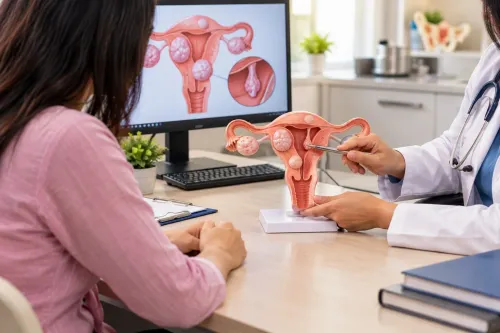
The clinician may inspect the vulva, use a speculum to view the vagina and cervix, and perform a pelvic examination. Testing depends on the exposure and symptoms, not on a fixed package.
| Test | What it looks for | Important limit |
|---|---|---|
| STI test | Urine, vaginal or cervical sample, throat or rectal swab, or blood test | A normal ultrasound does not exclude an STI |
| Vaginal infection test | Causes of discharge, itching, odour or irritation | A negative STI test does not explain every cause of discharge |
| Pregnancy test | Pregnancy, including before some treatments or imaging | It does not identify an infection |
| Cervical screening | Preventive assessment of cervical-cell changes | Due by age, history and local guidance, not every new symptom |
| Pelvic ultrasound | Uterus, ovaries and some causes of pelvic pain or bleeding | It cannot replace swabs or blood tests |
Do not douche or use vaginal antiseptics. Ask whether to avoid sex or vaginal products before a swab. Dr Kunjir's Brio Clinic may suit sexual health concerns gynaecologist in Pune when you want local assessment and follow-up; confirm available tests and referrals before booking.
Related service
Gynaecologist Sexual health is fundamental to the overall health and well-being of individuals, couples and families, and to the social and economic development of... View service → |
What if the problem is sexual function rather than an infection?
Book an appointment when reduced desire, arousal or orgasm difficulty persists, recurs, causes distress, affects intimacy, or makes sex impossible. The same threshold applies to fear of penetration, involuntary vaginal-muscle tightening, persistent dryness, or pain after infection tests are negative.
That is the practical answer to sexual health problems when to see a gynaecologist in Pune.
Possible contributors include:
- Postpartum or menopausal changes
- Medication or contraception effects
- Pelvic-floor dysfunction
- Endometriosis
- Vulvodynia
- Relationship difficulties
- Anxiety
No single cause is the default. Sexual health symptoms in Pune deserve assessment based on your pattern, timing and triggers rather than an assumption that the problem is infection or psychological.
A gynaecologist can assess physical causes, review medicines and contraception, and decide whether you need pelvic-floor physiotherapy, counselling or sex therapy. Tell them whether symptoms began after childbirth, menopause, a new medicine, relationship change or a painful sexual experience.
A normal visible examination does not invalidate pain or sexual difficulty; vulvodynia, muscle spasm and other problems can exist without an obvious lesion. Persistent symptoms deserve a planned review, not repeated over-the-counter treatment for presumed thrush.
Frequently asked questions
Which sexual health symptoms mean you should see a gynaecologist in Pune?
Book an appointment for persistent or recurring pain, painful sex, unusual discharge or odour, bleeding after sex, genital sores, itching, burning urination or reduced sexual function.
Which sexual health warning signs need same-day or emergency care?
Seek same-day care for severe pelvic pain, heavy bleeding, fever with pelvic symptoms, fainting, sudden testicular pain or suspected sexual assault. After possible HIV exposure, ask about PEP within 72 hours.
How can an STI appear, and what should you do after possible exposure?
STIs can cause discharge, sores, blisters, rashes, burning urination, pelvic pain or no symptoms. Avoid sex until assessed, use condoms, disclose the exposure and ask about testing, treatment and partner notification.
What will a Pune gynaecologist ask, examine and test?
Expect questions about symptoms, timing, partners, contraception, periods, pregnancy possibility and medicines. Tests can include a urine sample, vaginal or cervical swab, blood tests and a pelvic examination when indicated.
What if the problem is sexual function rather than an infection?
Discuss pain, low desire, arousal difficulty, orgasm difficulty or involuntary tightening. A gynaecologist can assess physical, hormonal, medication-related and psychological contributors and recommend appropriate care.
Keywords