Breathing that worsens quickly, fails to improve after a prescribed reliever, or appears with swelling, collapse or confusion needs more than routine allergy advice. You will learn how to identify emergency signs, respond safely, control common triggers and choose the right level of medical care in Pune.
Key takeaways
- Call 112 or 108 for rapidly worsening breathing or inability to speak full sentences.
- Sit upright, use the prescribed reliever, and follow the written asthma action plan.
- Record peak-flow readings, symptoms, medicines, and suspected allergy or non-allergy triggers.
- Seek same-day medical care when symptoms persist or peak flow falls below your action-plan threshold.
When an asthma attack needs emergency help
Call 112 or 108 for emergency help when breathing is rapidly worsening, the person cannot speak in full sentences, or the prescribed reliever is not working promptly. Sit them upright, keep the inhaler and written action plan with them, avoid driving if they are severely unwell, and follow the dispatcher’s instructions.
Quieter wheezing is not always improvement: severely narrowed airways can move too little air to produce much sound.
Call emergency services immediately if any of these signs appear:
- Blue or grey lips
- Severe chest retractions, with the skin pulling in between or below the ribs
- Exhaustion, drowsiness or confusion
- Fainting
- A silent chest
- Poor response to the prescribed reliever
Pregnancy, older age and a previous severe asthma attack are reasons to seek help promptly rather than waiting for symptoms to settle. Search terms such as asthma attack treatment in Pune or asthma breathing problems doctor should not delay emergency care.
| Situation | What it means | What to do |
|---|---|---|
| Emergency signs | The attack may deteriorate quickly | Call 112 or 108; use the person’s action plan and prescribed inhaler as directed while waiting |
| Improving symptoms | Breathing is clearly returning toward normal | Continue the action plan and arrange medical review |
| Persistent but non-severe symptoms | Symptoms continue without red flags | Seek same-day clinical advice, not a routine appointment weeks later |
What to do during an attack—and when the diagnosis may be different
During a suspected asthma attack, use this sequence:
- Sit upright and stay calm. Do not lie flat.
- Follow the person’s written asthma action plan.
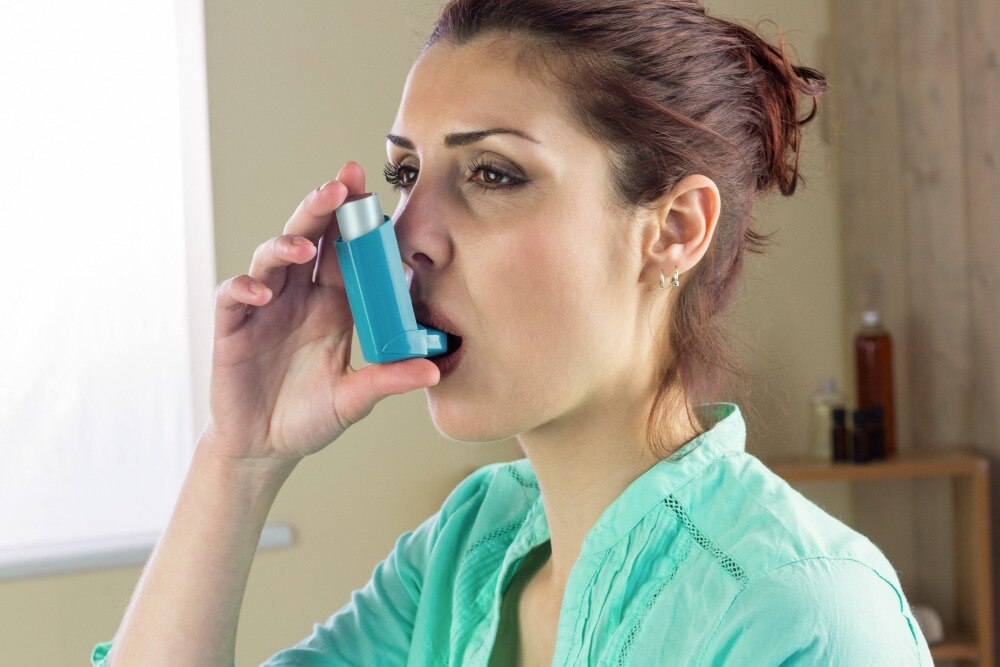
- Use their own prescribed reliever inhaler with a spacer if available.
- Call 112 or 108 if symptoms worsen, fail to respond promptly, or any emergency sign appears.
Salbutamol instructions differ by age, inhaler type and personal plan. Do not treat the commonly quoted one-puff-every-30–60-seconds maximum of 10 puffs as a universal prescription. Never borrow another person’s inhaler.
| Pattern | Clues that point away from routine asthma | Urgent action |
|---|---|---|
| Anaphylaxis | Wheeze with throat or tongue swelling, hoarse voice, hives, vomiting, dizziness or collapse | Use the prescribed adrenaline auto-injector immediately and call 112 or 108; a bronchodilator is not a substitute |
| Choking | Blocked airway, inability to breathe or speak, sudden collapse | Call emergency services and follow choking first-aid instructions |
| Panic symptoms | Tingling, trembling or rapid breathing without the person’s usual wheeze pattern | Seek urgent assessment if breathing does not settle |
| Pneumonia | Fever, cough, chest pain or symptoms unlike usual asthma | Arrange urgent medical assessment |
| Heart problem or pulmonary embolism | Severe chest pain, fainting, or one-sided leg swelling | Call emergency services |
If the episode does not fit the person’s usual pattern, do not rely on an asthma allergy doctor in Pune search or a routine appointment. Get urgent assessment instead.
How symptoms and peak-flow readings guide same-day care
Increasing wheeze, chest tightness or rapid breathing warrants same-day medical review, even if the episode settles. Arrange it when asthma wakes you at night, reduces exercise or work capacity, requires repeated reliever doses, leads to urgent-care visits or has needed repeated oral steroid courses.
Check these warning signs against your usual control:
- Symptoms are returning sooner after the quick-relief inhaler.
- You need the reliever more often than your written action plan allows.
- Your peak flow is falling from your personal best.
- A recent flare required urgent care or oral prednisolone.
- You are pregnant and symptoms are worsening; do not stop prescribed controller treatment without medical advice.
A quick-relief inhaler temporarily opens narrowed airways. Controller treatment containing an inhaled corticosteroid treats the inflammation driving asthma, so frequent reliever use is a warning sign, not proof that asthma is controlled. Measure peak flow against your own personal best: 80–100% is commonly green, 50–79% yellow and below 50% red.
Your clinician’s written thresholds take priority, and severe symptoms override a reassuring number.
Book a planned review after every significant flare to check inhaler technique, adherence, rhinitis, reflux, exposures and whether the diagnosis remains correct. Do not stop controller treatment when symptoms improve, including during pregnancy, without medical advice.
If searching for an asthma specialist in Pune, choose a clinician who can provide this review and a written action plan.
Allergy and non-allergy triggers worth recording
A breathing episode after pollen, house-dust-mite material, mould, cockroach particles or pet dander does not prove an allergy. Smoke, incense, perfumes, air pollution, workplace dusts or chemicals, medicines and foods can also trigger symptoms; viral infections, exercise and cold air can worsen asthma without being allergies.
| Trigger type | Examples to record | Clue to compare |
|---|---|---|
| Allergic exposure | Mould, mites, cockroach particles, pet dander, pollen, foods or medicines | Reproducible symptoms after the same exposure, sometimes with hives or nasal symptoms |
| Irritant exposure | Tobacco smoke, incense, perfume, pollution, dusts or workplace chemicals | Symptoms after inhalation without a consistent allergic pattern |
| Non-allergic trigger | Viral infection, exercise or cold air | Symptoms linked to illness, exertion or temperature |
- Fix leaks, dry damp rooms and remove visible mould safely; do not disturb extensive mould without suitable protection and professional help.
- Wash bedding regularly in hot water, keep smoke and incense out of the home, and choose fragrance-free products.
- Check pollen and pollution conditions before outdoor exercise, then record the time, place, activity, exposure and symptoms.
- A positive allergy test or one episode after exposure does not prove causation. Do not remove pets or foods without a reproducible pattern and clinical assessment.
- If exposure causes throat or tongue swelling, hoarse voice, hives, vomiting, dizziness or collapse, use the prescribed adrenaline auto-injector immediately and call 112 or 108. For planned asthma allergy care near Hadapsar, take this trigger record to the clinician.
How to choose the right asthma and allergy assessment in Pune
For recurring breathing problems, judge the appointment by what it can establish, not by a search label. “asthma allergy doctor in Pune,” “asthma specialist in Pune,” “asthma allergy care near Hadapsar” and “asthma breathing problems doctor” describe a care need, not a standard qualification.
| Check | Ask for | Why it matters |
|---|---|---|
| Objective testing | Spirometry with bronchodilator reversibility; FeNO; peak-flow variability; or bronchial challenge testing when appropriate | One test may miss variable airway narrowing |
| Practical review | Inhaler-technique demonstration and assessment of rhinitis, reflux, workplace exposure and medication reactions | Poor technique or an untreated coexisting problem can mimic uncontrolled asthma |
| Safety planning | A written asthma action plan with personal treatment thresholds | You know what to do when symptoms change |
Intermittent symptoms or treatment already started can make results falsely reassuring. Diagnosis should not rest on one wheezing episode or a positive allergy test; the clinician must match test results to your symptom pattern and examination.
Ask how the clinic handles follow-up after testing, including whether treatment will be reviewed rather than simply adding another reliever inhaler. Dr Kunjir's Brio Clinic may be relevant for planned respiratory consultations in Pune, including care coordinated alongside its gynaecology and women's health consultations.
Do not book routine care for rapidly worsening breathlessness, inability to speak full sentences, blue or grey lips, severe chest retractions, exhaustion, confusion, fainting, a silent chest or poor response to the prescribed reliever. Call 112 or 108 and follow dispatcher instructions.
Related services
Chest Diseases Treatment Asthma triggered by exposure to the same substances that trigger allergy symptoms. View service → |
CHEST DISEASES TREATMENT COUGH, DIFFICULTY IN BREATHING If you are short of breath with a cough and/or fever, you may have a chest infection or pneumonia. View service → |
Frequently asked questions
When does an asthma attack need emergency help?
Call 112 or 108 when breathing is rapidly worsening, the person cannot speak in full sentences, or the prescribed reliever is not working promptly.
What should you do during an asthma attack?
Sit upright, use the prescribed reliever according to the written action plan, keep the plan and inhaler with the person, and follow emergency dispatcher instructions when calling for help.
How do peak-flow readings guide same-day asthma care?
Compare the reading with the personal zones in your asthma action plan. A falling reading or persistent symptoms requires prompt medical advice, while severe symptoms require emergency help.
Which asthma and allergy triggers should you record?
Record exposure to dust mites, pollen, mould, pets, smoke, perfumes, cleaning products, respiratory infections, cold air, exercise, workplace substances, and new medicines.
How do you choose an asthma and allergy assessment in Pune?
Choose a clinician who can review your symptom pattern, inhaler technique, peak-flow readings, medicines, trigger history, and whether another condition could explain the breathing problem.
Keywords