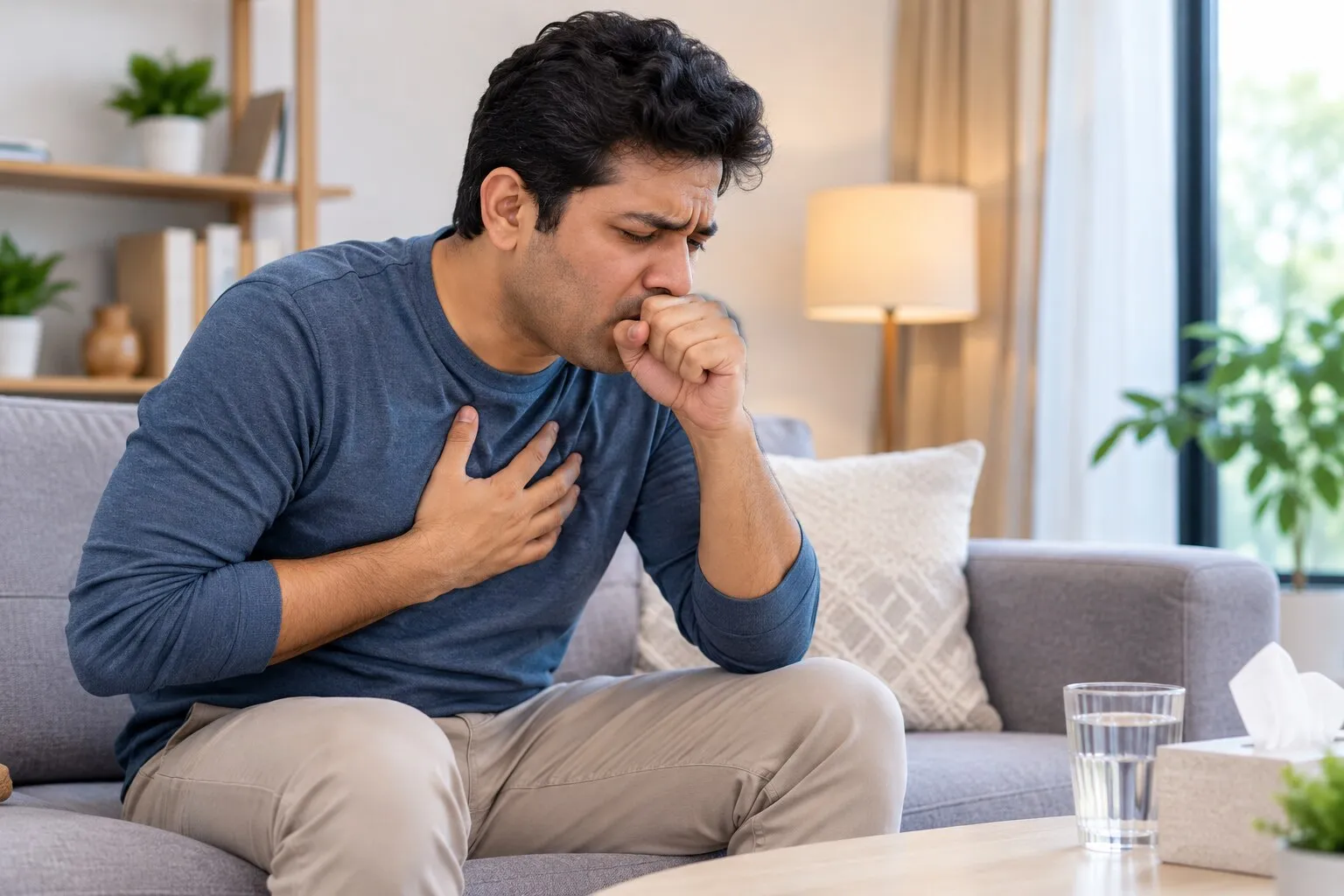
Cold early mornings, dry air, monsoon dampness, heat, sudden temperature changes and polluted roadside air can all make breathing symptoms worse in Pune. By the end, you will be able to link symptoms to weather and air-quality patterns, reduce exposure, distinguish common triggers from illness, and recognise when medical assessment is needed.
Key takeaways
- Check AQI, PM2.5 and PM10 before prolonged outdoor exercise.
- Cover your nose and mouth in cool, dry or polluted air.
- Fever, wheezing or persistent breathlessness needs medical assessment.
- Track recurring seasonal symptoms to identify triggers and airway flare-ups.
Which Pune weather patterns can trigger cough or breathlessness?
Cool, dry air can irritate and narrow sensitive airways, causing cough, chest tightness or breathlessness. The effect is stronger during outdoor exercise, when you inhale more unhumidified air through your mouth.
Cold Pune mornings can also trap traffic emissions near the ground during a temperature inversion, so roadside exposure may be worse than the day’s general weather suggests.
| Seasonal pattern | How it can affect breathing in Pune | What to notice |
|---|---|---|
| Winter and early morning | Cold, dry air and trapped PM2.5 or PM10 can aggravate asthma, rhinitis and chronic lung disease | Symptoms near busy roads or during morning exercise |
| Summer heat | Heat, dehydration, dust and stagnant polluted air can increase airway irritation and make breathing feel harder | Cough or tightness on hot, hazy days |
| Monsoon | Humidity, damp walls, mould and increased time indoors can trigger cough or wheeze; rain can briefly remove some airborne particles | Symptoms in damp rooms or after visible mould appears |
| Rapid weather changes | Sudden shifts in temperature or humidity can upset sensitive airways and coincide with viral exposure or dust movement | Symptoms starting after a cold-to-hot or dry-to-humid shift |
What people call weather cough in Pune is often partly an air-pollution response, not a reaction to temperature alone. Similarly, seasonal breathlessness in Pune does not prove a weather allergy: asthma, allergic rhinitis with post-nasal drip, infection, reflux, anaemia or heart disease can follow the same calendar.
Severe or rapidly worsening breathlessness, blue lips, confusion, fainting, chest pain or poor relief from a prescribed inhaler needs urgent medical assessment.
How AQI, PM2.5 and PM10 change your outdoor-risk decision
Do not treat a clear Pune sky as proof that outdoor air is safe. The Central Pollution Control Board’s AQI combines pollutants into one number, but your exposure can be higher beside a busy road or during a cold, still morning than the citywide reading suggests.
| AQI range | CPCB category | Outdoor decision |
|---|---|---|
| 0–50 | Good | Usual activity is reasonable. |
| 51–100 | Satisfactory | Most people can continue normally; sensitive people should watch for symptoms. |
| 101–200 | Moderately Polluted | Reduce strenuous outdoor exercise if you have asthma or another lung condition. |
| 201–300 | Poor | Shorten outdoor time and avoid roadside exertion; wear a well-fitting N95 or equivalent respirator when exposure is unavoidable. |
| 301–400 | Very Poor | Stay indoors for exercise and use an N95 or equivalent outdoors. |
| 401–500 | Severe | Avoid outdoor activity; use a respirator only if you must leave. |
PM2.5 means particles 2.5 micrometres or smaller, small enough to travel deep into the lungs. PM10 includes particles up to 10 micrometres, which can irritate the nose and larger airways; dust, construction debris and road particles often raise it. Check the PM2.5 and PM10 readings, not only AQI, before a long walk or commute.
Air quality breathing problems in Pune can appear below the Poor band, especially with asthma or chronic lung disease.
The weather conditions that worsen cough and breathlessness in Pune can concentrate pollution: cool, still air and temperature inversions trap emissions near breathing level. A respirator must seal around your nose and cheeks; a loose cloth or surgical mask will not provide equivalent particle protection.
Is the cause pollution, allergy, infection or an airway flare-up?
Timing is a clue, not a diagnosis. These weather-related chest symptoms in Pune that begin during a dusty roadside commute and ease indoors point towards inhaled irritants; symptoms after outdoor exposure with sneezing and itchy eyes point towards an allergic trigger.
A cough developing over days with fever, sore throat, body aches or a sick contact points towards an acute illness, while repeated wheeze, chest tightness, night waking or relief from a prescribed reliever points towards an airway flare-up.
Patterns that change the interpretation:
- Pollution: symptoms follow traffic, construction dust or high PM2.5 or PM10, even under a clear sky.
- Allergy: symptoms recur around dust or dampness with sneezing, nasal blockage or post-nasal drip, without fever.
- Infection: symptoms develop over days with fever, fatigue, sore throat or a sick contact. Mucus colour alone does not prove a bacterial infection.
- Airway flare-up: cough or breathlessness repeats with exercise, cold dry air or at night, especially with asthma or COPD.
A seasonal pattern can expose an existing problem rather than cause it. Do not stop an inhaled corticosteroid controller because the weather improves; repeated reliever use needs a treatment review.
Seek urgent care for rapidly worsening breathlessness, inability to speak normally, blue lips, confusion, fainting, chest pain, coughing blood or a reliever that no longer gives its usual relief.
Practical ways to reduce weather-related breathing exposure
Cold morning air and roadside emissions can make a weather cough in Pune worse, even under a clear sky. Breathe through your nose, cover your nose and mouth with a scarf in cold air, and shift walking or exercise away from dawn, traffic queues and visible dust.
- Check the local AQI before outdoor activity. Use a well-fitting N95 or equivalent respirator when pollution or dust is high; a loose cloth mask will not filter PM2.5 reliably.
- Keep windows shut during a nearby construction plume or traffic peak, then ventilate when outdoor air is cleaner. Never burn incense, mosquito coils or tobacco indoors.
- Fix leaks, dry wet walls, wash bedding weekly in hot water and remove visible mould. Rain reduces some particles but does not prevent damp-related mould or dust-mite exposure.
- Use a hygrometer. Keep indoor humidity around 40–60%; a dehumidifier helps damp rooms, while a humidifier can worsen mould if it makes the room wet.
| Device or change | Helps with | Limitation |
|---|---|---|
| HEPA air purifier | Indoor PM2.5 and dust | Does not remove carbon monoxide, all gases or outdoor exposure; size it for the room and replace filters |
| N95 respirator | Short outdoor exposure to particles | It must seal around the nose and cheeks; it does not protect against gases |
| Dehumidifier | Dampness, mould-friendly humidity | Needs drainage and cleaning; it cannot cure hidden wall leaks |
| Humidifier | Dry, heated indoor air | Dirty water spreads microbes, and excess humidity worsens mould |
These steps reduce exposure, not the cause of recurring air quality breathing problems in Pune. Persistent symptoms still need assessment.
When recurring seasonal symptoms need a respiratory assessment
Arrange a respiratory review when seasonal breathlessness in Pune returns, lasts beyond the trigger, or interferes with walking, exercise, sleep or work. This applies to asthma, COPD, bronchiectasis, allergic rhinitis and anyone with a previous respiratory problem.
A recurring winter, monsoon or pollution-season pattern is not proof that weather is the cause; asthma, post-nasal drip, infection, reflux, anaemia and heart disease need different assessments.
Book a review if you need your reliever inhaler more frequently, wake at night with cough or wheeze, produce more sputum, notice declining exercise tolerance, or have repeated episodes of weather related chest symptoms in Pune.
Do not stop an inhaled corticosteroid controller because symptoms improve; it reduces airway inflammation and is not the same as a quick-relief bronchodilator. A clinician such as the respiratory team at Dr Kunjir's Brio Clinic can check oxygen saturation, inhaler technique, spirometry and whether treatment matches the pattern.
Treat breathlessness as urgent when you have:
- Severe or rapidly worsening difficulty breathing
- Inability to speak in normal sentences
- Blue or grey lips or face, fainting or confusion
- No usual relief from your prescribed reliever
- New breathlessness with chest pain, coughing blood or a low oxygen reading
Do not attribute these signs to Pune weather or wait for conditions to change. Seek emergency medical care.
Frequently asked questions
Which Pune weather patterns can trigger cough or breathlessness?
Cool, dry air can irritate and narrow sensitive airways, especially during outdoor exercise. Hazy, dusty and high-pollution conditions can also worsen cough, chest tightness and breathlessness.
How do AQI, PM2.5 and PM10 affect outdoor decisions?
Check the AQI and particulate levels before spending time outdoors. Higher PM2.5 and PM10 exposure increases breathing risk, so reduce strenuous activity and choose cleaner indoor or lower-traffic spaces.
How can you tell whether symptoms come from pollution, allergy, infection or an airway flare-up?
Pollution-related symptoms follow exposure, allergies often include sneezing or itchy eyes, and infections commonly bring fever or feeling unwell. Recurrent wheezing, chest tightness or breathlessness can indicate an airway flare-up.
When do recurring seasonal cough and breathlessness symptoms need assessment?
Arrange a respiratory assessment when symptoms recur each season, limit activity, disturb sleep, require frequent reliever medication, or include wheezing or persistent breathlessness.
Keywords