Breathlessness, fatigue and ankle swelling can arise from lung disease, right-heart strain or left-sided heart failure, and symptoms alone cannot separate them. You will be able to identify the likely starting specialist, understand the tests that distinguish these conditions and recognise when emergency care is safer than a clinic appointment.
Key takeaways
- Cor pulmonale starts with lung or pulmonary-vessel disease and strains the right ventricle.
- Left-sided heart failure starts in the left ventricle and reduces blood flow to the body.
- Breathlessness and swelling overlap, so symptoms alone cannot identify the cause.
- See a chest physician first when lung disease or low oxygen is prominent.
How Cor Pulmonale Differs From Left-Sided Heart Failure
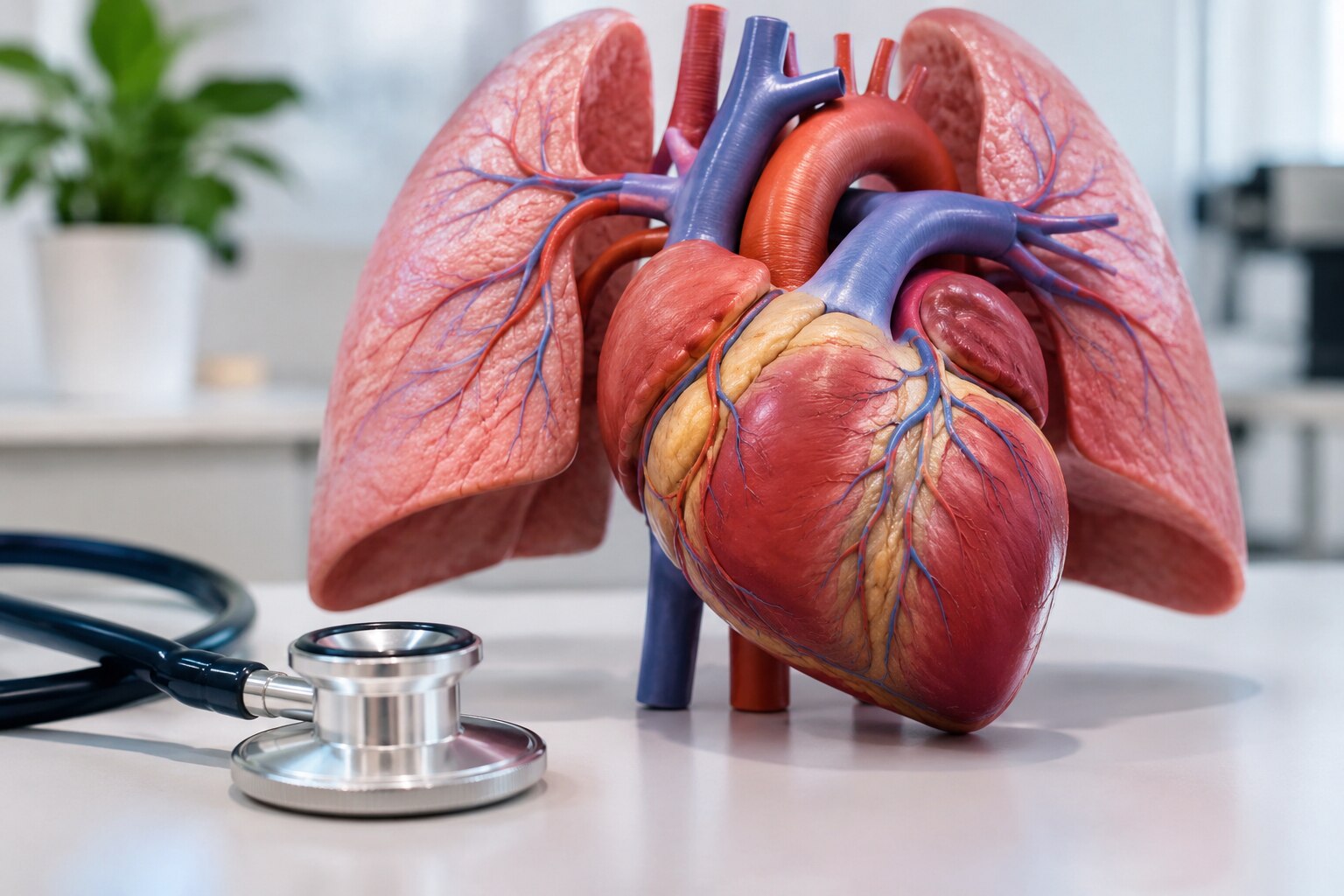
Cor pulmonale affects the right ventricle: lung or pulmonary-vessel disease raises pressure in the pulmonary arteries, so the right ventricle must pump harder to push blood through the lungs. Over time, it can enlarge, weaken and fail. Left-sided heart failure begins in the left ventricle, which pumps oxygenated blood to the body.
| Condition | Main chamber affected | How pressure develops |
|---|---|---|
| Cor pulmonale | Right ventricle | COPD, pulmonary fibrosis, sleep-disordered breathing, chronic pulmonary emboli or pulmonary arterial hypertension increase resistance in the lung circulation |
| Left-sided heart failure | Left ventricle | Coronary artery disease, high blood pressure, valve disease or cardiomyopathy weaken the chamber or impair its filling |
| General heart failure | Right ventricle, left ventricle or both | The heart cannot pump or fill well enough to meet the body’s needs |
Lung disease creates heart strain from lung disease in Pune in the same way it does elsewhere: narrowed, damaged or poorly oxygenated lung vessels constrict, increasing pulmonary vascular resistance. The right ventricle then works against that pressure.
Left-sided heart disease can also raise pressure behind the lungs, but clinicians classify that as pulmonary hypertension from left-heart disease, not usually cor pulmonale.
For cor pulmonale or heart failure specialist care in Pune, start with a pulmonologist when lung disease or pulmonary hypertension appears to drive the problem, and involve a cardiologist when testing shows ventricular dysfunction, coronary disease or an arrhythmia. Dual assessment is important when the cause remains unclear.
Cor Pulmonale Versus Heart Failure Symptoms: What Overlaps
Breathlessness while walking, reduced exercise tolerance, fatigue, ankle swelling and rapid weight gain occur in both cor pulmonale and heart failure. These cor pulmonale versus heart failure symptoms show fluid retention or limited circulation, but they do not identify which side of the heart or which disease is responsible.
| Finding | More suggestive of cor pulmonale | More suggestive of left-sided heart failure |
|---|---|---|
| Breathlessness | Wheezing, chronic cough, low oxygen, or a long-standing lung disorder | Breathlessness when lying flat or waking suddenly gasping |
| Swelling and weight gain | Right-heart fluid retention after lung disease has raised pulmonary pressure | Fluid congestion from left-ventricular dysfunction |
| Chest discomfort or fainting | Severe pulmonary hypertension or right-heart strain | Coronary disease, valve disease, or advanced pump failure |
| Bluish lips | Persistent low oxygen from lung or pulmonary-vessel disease | Advanced congestion or low cardiac output |
The distinction is not reliable from symptoms alone. COPD, pulmonary fibrosis, bronchiectasis, obstructive sleep apnoea and repeated pulmonary emboli can cause breathlessness and fatigue, while anaemia, infection and poor fitness can mimic either condition.
Left-sided heart disease can also raise pressure in the lung circulation, so a high pulmonary-pressure estimate does not automatically mean cor pulmonale.
Clinicians need oxygen measurements, an electrocardiogram, chest imaging and echocardiography to assess the pattern. Right-heart catheterisation directly measures pulmonary pressures and cardiac output when pulmonary hypertension requires confirmation; an echocardiogram estimate alone is not that diagnosis.
Which Lung and Heart Conditions Lead to Each Problem?
Pulmonary hypertension is the pressure problem; cor pulmonale is the right-heart consequence; heart failure is the broader syndrome of inadequate pumping or filling. Lung disease raises resistance in the pulmonary arteries, forcing the right ventricle to pump harder. Over time, it can enlarge, weaken and fail.
| Condition | What happens in the sequence | Typical causes |
|---|---|---|
| Pulmonary hypertension | Pressure rises in the vessels between the right ventricle and lungs | COPD, emphysema, pulmonary fibrosis, bronchiectasis, obstructive sleep apnoea, chronic pulmonary emboli or pulmonary arterial hypertension |
| Cor pulmonale | Lung-related pulmonary hypertension causes right-ventricular enlargement or failure | Advanced chronic lung disease or pulmonary-vessel disease |
| Heart failure | The left ventricle, right ventricle or both cannot pump or fill effectively | Coronary artery disease, previous heart attack, high blood pressure, valve disease or cardiomyopathy |
Left-sided heart disease can also raise pulmonary pressure by backing blood into the lung circulation. That pathway is classified as heart failure from left-heart disease, not usually cor pulmonale, even when the right ventricle later becomes strained.
Heart strain from lung disease in Pune deserves attention when chronic cough, wheezing, low oxygen, sleep-apnoea symptoms or a long-standing lung diagnosis accompanies breathlessness. Repeated pulmonary emboli and interstitial lung disease can follow the same lung-to-pressure-to-right-heart sequence.
A person with sudden breathlessness, chest pain, fainting or blue lips needs urgent assessment because an acute clot or severe cardiac event can progress quickly.
What Tests Decide Whether You Need Lung or Cardiac Care?
Pulse oximetry, blood pressure, chest examination and neck-vein assessment provide the starting clues, but they cannot distinguish cor pulmonale from left-sided heart failure. An electrocardiogram can reveal rhythm problems, right-heart strain or previous heart damage; BNP or NT-proBNP supports heart-failure assessment but can rise with pulmonary hypertension and kidney disease.
| Test | What it can show | What it cannot prove |
|---|---|---|
| Echocardiogram | Right- or left-ventricular size and function, valve disease, estimated pulmonary pressure | The cause of pulmonary hypertension or a definitive pressure measurement |
| Pulmonary-function tests | COPD, airflow obstruction, restriction or reduced gas transfer | Whether breathlessness is solely respiratory |
| Chest X-ray or CT chest | Emphysema, fibrosis, bronchiectasis, enlarged heart or lung disease | Whether abnormal findings are causing the symptoms |
| CT pulmonary angiography or ventilation–perfusion scan | Acute or chronic pulmonary emboli | Left-ventricular function |
| Six-minute walk and oxygen assessment | Exercise desaturation and functional limitation | The underlying diagnosis |
| Right-heart catheterisation | Pulmonary pressures, cardiac output and pre- or post-capillary pulmonary hypertension | Every lung disease causing the pressure rise |
Ask for pulmonary-function testing and oxygen measurement when cough, wheeze, low oxygen or suspected sleep apnoea dominates. Ask for echocardiography and cardiology review when there is abnormal rhythm, coronary risk, valve disease or ventricular dysfunction.
A respiratory heart condition doctor in Pune should be able to coordinate both pathways and arrange CT pulmonary angiography, ventilation–perfusion scanning or catheterisation when indicated. Fainting, chest pain at rest or severe breathlessness requires emergency assessment.
Which Specialist Should You See First in Pune?
Choose a chest physician or pulmonologist first when cough, wheeze, low oxygen, COPD, asthma, pulmonary fibrosis, bronchiectasis, suspected sleep apnoea or pulmonary hypertension dominates. Choose a cardiologist when chest pressure, known coronary disease, significant arrhythmia, valve disease or an echocardiogram showing left- or right-ventricular dysfunction points to a cardiac cause.
| Specialist | Choose this route when | Confirm access to |
|---|---|---|
| Chest physician or pulmonologist | Lung disease appears to be driving right-heart strain | Pulmonary-function testing, oxygen assessment and evaluation for pulmonary hypertension |
| Cardiologist | Cardiac disease, rhythm disturbance or ventricular dysfunction is suspected | Echocardiography, electrocardiography and cardiac rhythm assessment |
| Combined pulmonary-cardiology team | Pulmonary hypertension, recurrent exertional fainting, right-ventricular dysfunction or unexplained breathlessness is present | Coordinated review and, when indicated, CT pulmonary angiography or ventilation–perfusion scanning |
Searching for a cor pulmonale chest physician in Pune? Check whether the doctor investigates both lung and heart causes; the title “chest physician” alone does not confirm experience with advanced pulmonary hypertension or right-heart failure.
This is the practical question behind cor pulmonale or heart failure specialist care in Pune and finding a respiratory heart condition doctor in Pune.
Dr Kunjir's Brio Clinic can be a starting point for respiratory assessment if you ask which tests are available and when cardiology referral is needed.
Go to an emergency department now for:
- Severe breathlessness at rest, blue or grey lips, confusion or rapidly worsening swelling
- Fainting or near-fainting during exertion
- New chest pressure or coughing blood
Frequently asked questions
How does cor pulmonale differ from left-sided heart failure?
Cor pulmonale develops when lung or pulmonary-vessel disease raises pressure against the right ventricle. Left-sided heart failure begins in the left ventricle, which pumps oxygenated blood to the body.
Which symptoms overlap between cor pulmonale and heart failure?
Both can cause breathlessness, fatigue, reduced exercise tolerance and swelling in the legs. A clinical examination and tests are needed because symptoms alone cannot identify which side of the heart is affected.
Which conditions can lead to cor pulmonale or left-sided heart failure?
Cor pulmonale can follow chronic obstructive pulmonary disease, pulmonary hypertension, interstitial lung disease, sleep apnoea or repeated pulmonary emboli. Left-sided heart failure can result from coronary artery disease, a previous heart attack, high blood pressure, valve disease or cardiomyopathy.
What tests help decide whether lung or cardiac care is needed?
Doctors may use oxygen saturation, chest imaging, pulmonary function tests, an electrocardiogram, echocardiography, blood tests such as BNP or NT-proBNP, and CT pulmonary angiography when a clot is suspected.
Which specialist should you see first in Pune?
See a chest physician first when chronic cough, wheezing, low oxygen, sleep-related breathing problems or known lung disease dominates. See a cardiologist first for chest pressure, fainting, palpitations, known heart disease or markedly abnormal cardiac findings. A combined evaluation is appropriate when both systems may be involved.
Keywords