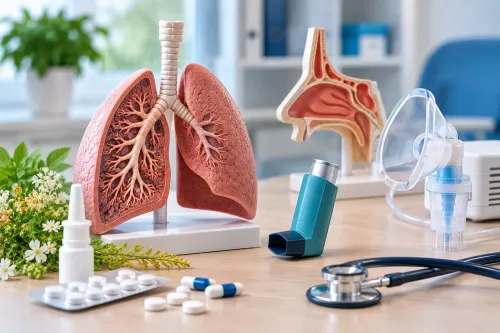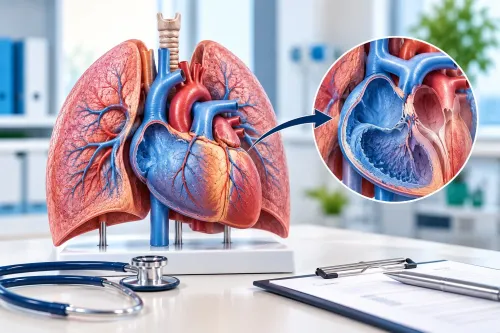
A child and an adult in the same home may share dust, smoke, mould or seasonal triggers, but their symptoms, tests, inhaler devices and treatment doses are not interchangeable. By the end, you will know which parts of care can be shared, which require age-specific assessment, and how to choose the right respiratory clinician in Pune.
Key takeaways
- Use one clinic, but insist on age-specific asthma protocols.
- Children need paediatric lung testing and child-sized inhaler devices.
- Adults need checks for smoking, reflux, work exposure and heart disease.
- Compare action plans, testing access and emergency advice before choosing care.
One asthma-allergy service can see a family, but one protocol cannot treat everyone
Yes, children and adults can enter the same asthma-allergy care pathway, but they cannot automatically follow the same protocol. One clinic may assess several family members; diagnosis, inhaler device, medicine strength, dose, follow-up interval and emergency thresholds depend on age, body size, lung function, other illnesses and the patient’s ability to describe symptoms.
| Age group | Symptoms to notice | Common reporting problem |
|---|---|---|
| Preschool children | Recurrent wheeze, fast breathing, reduced play, feeding difficulty or nighttime cough | They may not describe chest tightness or breathlessness |
| School-age children | Nighttime cough, coughing during running or activity avoidance | They may call breathlessness tiredness |
| Teenagers | Chest tightness, exercise symptoms or inconsistent medicine use | They may minimise symptoms or skip treatment |
| Adults | Breathlessness, wheeze, cough or chest tightness | They may blame symptoms on fitness, stress or smoking |
A shared household plan can address tobacco smoke, incense, dust, mould and outdoor pollution, but it must identify each person’s medicine, device, warning signs and escalation instructions. Never share an inhaler, and never assume an adult’s action plan suits a child.
For asthma allergy care for children and adults in Pune, ask for a separate written plan for every patient. The plan should state regular treatment, worsening-symptom steps and when to seek help.
Get emergency care for severe breathing difficulty, inability to speak or drink normally, bluish lips, marked drowsiness or poor response to the prescribed reliever. This individual approach is the foundation of safe asthma treatment for families in Pune.
When a child needs paediatric respiratory expertise and age-specific testing
Choose a child asthma allergy doctor in Pune when a young child has recurrent wheeze, nighttime cough, reduced running or play, breathing difficulty, or repeated “chest infections” that need clarification. Before about age five, clinicians usually make a clinical diagnosis from recurring symptoms, their timing, examination and response to treatment because reliable spirometry is difficult.
| Age | Usual assessment | Important limitation |
|---|---|---|
| Under about 5 | Symptom history, examination and response to treatment | Do not demand an adult-style spirometry result before considering asthma |
| About 5 and older | Spirometry, sometimes with bronchodilator response | A normal result while well does not exclude asthma |
| Any suitable age | Peak-flow patterns or FeNO | Use only when the child’s age, symptoms and local availability make the test useful |
Look for qualifications and experience in paediatric respiratory assessment, not simply the word “allergy” in a clinic name. The clinician should check growth and activity, use age-appropriate questions, conduct a child-friendly examination, and watch the child demonstrate the inhaler and spacer.
Assessment must separate asthma from viral wheeze, pneumonia, persistent infection, foreign-body aspiration and other causes. Caregivers provide essential evidence: record nighttime cough, running tolerance, sleep disruption, school attendance and response to medicines when a young child cannot describe breathlessness.
A normal spirometry result during a symptom-free visit does not settle the diagnosis; supervised further testing may be needed.
What an adult asthma allergy specialist should investigate beyond wheeze
A normal spirometry result on a good day does not rule out asthma. An adult asthma allergy specialist in Pune should arrange spirometry with bronchodilator testing, review peak-flow measurements, and use FeNO when appropriate. Variable airflow limitation may require testing during symptoms, repeated peak-flow records, or further supervised assessment.
The clinician should ask about smoking and vaping, workplace dust, chemicals and fumes, reflux, obesity, sleep apnoea, nasal disease, sinus symptoms and medication triggers such as aspirin or beta-blockers. Pregnancy also changes treatment decisions, so mention pregnancy or plans to conceive.
Several conditions resemble or worsen asthma: viral illness, pneumonia, chronic bronchitis, tuberculosis, vocal-cord or inducible-laryngeal obstruction, anxiety-related breathlessness, heart disease and reflux. Wheeze alone does not prove an allergy-driven condition or justify antibiotics; fever, focal chest findings or another confirmed bacterial indication changes that decision.
A useful consultation includes questions and checks that reveal patterns rather than accepting the label “allergy”:
- When do symptoms occur, and do exercise, cold air, work or nighttime make them worse?
- What previous prescriptions, antibiotics, inhalers and test results have you used?
- Can you demonstrate your inhaler technique so the specialist can correct errors?
- What alternative diagnosis has been considered if symptoms, examination or test results do not fit asthma?
Good assessment connects symptoms to objective findings and gives you a clear next step.
The same medicine name can require a different device, dose and action plan
The medicine name can match while the device, dose and action plan differ. Inhaled corticosteroid-containing treatment is the central controller approach for persistent asthma in children and adults; reliever-only treatment does not control airway inflammation and is not an adequate long-term strategy for many patients.
- Match the device to age, coordination and cooperation. Younger children commonly use a pressurised metered-dose inhaler with a spacer, while very young children may need a face mask. A spacer is a treatment-delivery tool, not a child-only convenience.
- Demonstrate every inhaler and spacer technique, then ask the patient or caregiver to repeat it. Poor timing, a loose mask seal or skipped breaths can leave medicine in the mouth instead of the lungs.
- Do not stop an inhaled corticosteroid abruptly when symptoms improve or because a child is growing. Reassess control, adherence, technique, growth and the lowest effective dose before stepping treatment up or down.
- Use targeted allergy testing when the history supports it. Skin-prick or blood-specific-IgE testing can identify sensitisation to selected allergens, but a positive result does not prove that exposure causes respiratory symptoms.
- Match testing to seasonality, pets, dust, mould and work exposures. Broad panels can produce misleading positives and unnecessary avoidance, adding restrictions without improving asthma allergy care for children and adults in Pune.
A written action plan must still be individual: it should name the person’s medicine, device, dose, warning signs and escalation steps. Never transfer an adult’s plan to a child simply because the medicine name is identical.
A practical checklist for choosing family asthma-allergy care in Pune
Before booking, verify that the service can assess children and adults without forcing them into one protocol. A child asthma allergy doctor in Pune should manage preschool assessment, while an adult asthma allergy specialist in Pune should address smoking, workplace exposure, pregnancy and other adult comorbidities.
- Confirm that clinicians assess both children and adults.
- Ask who examines preschool children and who manages adult comorbidities.
- Check whether spirometry, peak-flow review and FeNO are available when clinically appropriate.
- Ask for inhaler-and-spacer teaching, followed by your return-demonstration.
- Request a written, patient-specific asthma action plan covering regular treatment, worsening symptoms, clinician contact and emergency care.
- Confirm whether urgent worsening receives same-day advice and where to go for severe breathing difficulty, inability to speak or drink normally, bluish lips, marked drowsiness or poor response to the prescribed reliever.
| Check | What to compare | Why it matters |
|---|---|---|
| Family triggers | Tobacco smoke, incense, dust, mould and outdoor pollution | One household plan can reduce shared exposures |
| Individual treatment | Separate prescription, device, dose and warning plan | Shared triggers do not make treatment interchangeable |
| Follow-up | Review of control, technique and action plan | Problems are found before the next flare-up |
The best asthma treatment for families in Pune is coordinated rather than identical. Dr Kunjir's Brio Clinic can be considered when a Pune family wants one outpatient setting for women’s respiratory health, other chest concerns and age-appropriate asthma-allergy assessment. Judge the service by expertise, examination quality, instructions and follow-up—not the word “allergy” in its name.
Related service
Chest Diseases Treatment Asthma triggered by exposure to the same substances that trigger allergy symptoms. View service → |
Frequently asked questions
Can children and adults receive asthma-allergy care at the same clinic?
Yes. One clinic can assess a family, but each person needs an age-specific diagnosis, medicine dose, device, follow-up plan and emergency threshold.
When does a child need paediatric respiratory expertise?
Choose paediatric respiratory expertise when symptoms begin early, testing must match the child’s age, symptoms are difficult to describe, or inhaler technique needs child-specific support.
What should an adult asthma allergy specialist investigate beyond wheeze?
An adult specialist should assess smoking, occupational exposure, reflux, nasal allergy, medication triggers, sleep symptoms, infections and heart or other conditions that can mimic asthma.
Can children and adults use the same asthma medicine?
They may use the same medicine name, but strength, dose, inhaler or nebuliser device, spacer, technique and written action plan can differ by age and body size.
How should you choose family asthma-allergy care in Pune?
Check whether the clinic provides age-appropriate lung testing, inhaler teaching, allergy assessment, written action plans, follow-up access and clear emergency instructions.
Keywords